


Maybe you’ve read where Paul says he’s become all things to all men, so what does he mean by that?
What He Didn’t Mean
 Maybe you’ve read where the Apostle Paul says he’s become all things to all men, so what does he mean by that in 1 Corinthians 9:22? Here’s what he doesn’t mean. It doesn’t mean Paul compromised with sin in the church. Paul didn’t mean that it’s okay to blend in with the world or become like the world in order to win the world? I believe Paul means he tries to reach people and share the gospel in a way that makes sense to his audience, whether Jew or Gentile. The gospel is still the same for both, but he approaches people more from where they’re at in life and their belief system. Paul does not mean he waters down doctrines to accommodate people’s own belief, but that he is not quick to judge others but rather he is quick to share Christ. The audience doesn’t matter to him…it does matter to him that the gospel is shared with anyone with ears.

At Their Level
The best way to understand Scripture is to read the entire context of a certain verse, like reading the whole paragraph or better yet, read the entire chapter. We should never read just one verse and try to build a belief system on that. You end up with a cult or a false doctrine. So what did the Apostle Paul mean when he wrote, “To the weak I became weak, that I might win the weak. I have become all things to all people, that by all means I might save some” (1 Cor 9:22). Again, it doesn’t mean he became a sinner to sinners. We know Paul better than that! He tried to meet people at the own level at which they were at. He would share Christ with a blind invalid just as easy as he would with Caesar.
Meeting Them Where They’re At
When the Apostle Paul went to Athens (to the Greeks in Athens (at the Areopagus), he even quoted one of their philosophers to make a point (Acts 17:8). It was likely the 6th-century BC Cretan philosopher Epimenides. Paul’s quote was that “We are also his offspring.” This points directly to God Who truly is the Creator and Author of all life on earth. Paul used that philosophy Paul mentions the idol to the “unknown god” and then points them directly to the one true and living God Who “made from one man every nation of mankind to live on all the face of the earth, having determined allotted periods and the boundaries of their dwelling place” (Acts 17:26). Paul used one of their own poet’s quote to point out Who the true Creator was so that He was “unknown” no longer.

Accommodating Others
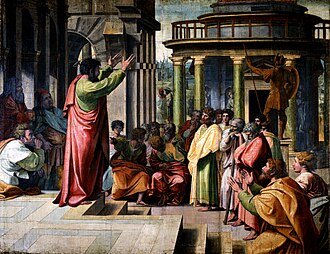
Saint Paul delivering the Areopagus Sermon in Athens, by Raphael, 1515
When I say that we can be accommodating to others, I surely don’t mean we can accommodate sin in the church or in our lives or in the lives of those in the Body of Christ. It’s more like meeting people where they are rather than expecting them to adapt to you. It means shifting your approach, language, and attitude to connect with different types of people in order to open a spiritual conversation to share Christ. It does not mean you are a “chameleon” for a greater good. On the divinity of Christ, on the sinless-ness of Christ, on the death and resurrection of Christ, we change not! We might change our approach in sharing the gospel, but we never change the gospel. Paul became all things to all people and tells us exactly why he wrote this, in writing, “I do it all for the sake of the gospel, that I may share with them in its blessings” (1 Cor 9:23). It is “for the sake of the gospel” so “that I may share” it with them. Paul said, “I am free from all, I have made myself a servant to all, that I might win more of them” (1 Cor 9:19), so he’s simply interested in winning souls, and not in compromising with the essentials of the faith. Even if Paul has to become like a servant to someone, he will, if that’s what it takes for someone to hear the gospel. To Paul, that’s all that mattered.
Summary
To “Become all things to all men,” is more like a directive on the empathy and adaptability we might have to show in sharing Christ. We have a man who is deaf in our church and I am slowly learning sign language (and I mean slowly!), but I am trying to reach him where I can communicate with him and thus, fellowship with him. I can’t do that unless I become like him and have to sign my words. I am praying that God might use my inferior sign language (very weak!), in order for this man to feel welcome and part of the Body of Christ, as indeed he is! So we must ask ourselves: “How then will they call on him in whom they have not believed? And how are they to believe in him of whom they have never heard? And how are they to hear without someone preaching” (Rom 10:14)? Then ask, “how are they to preach unless they are sent” (Rom 10:15a)? And is that someone you? If not you, who? And it might even take sign language.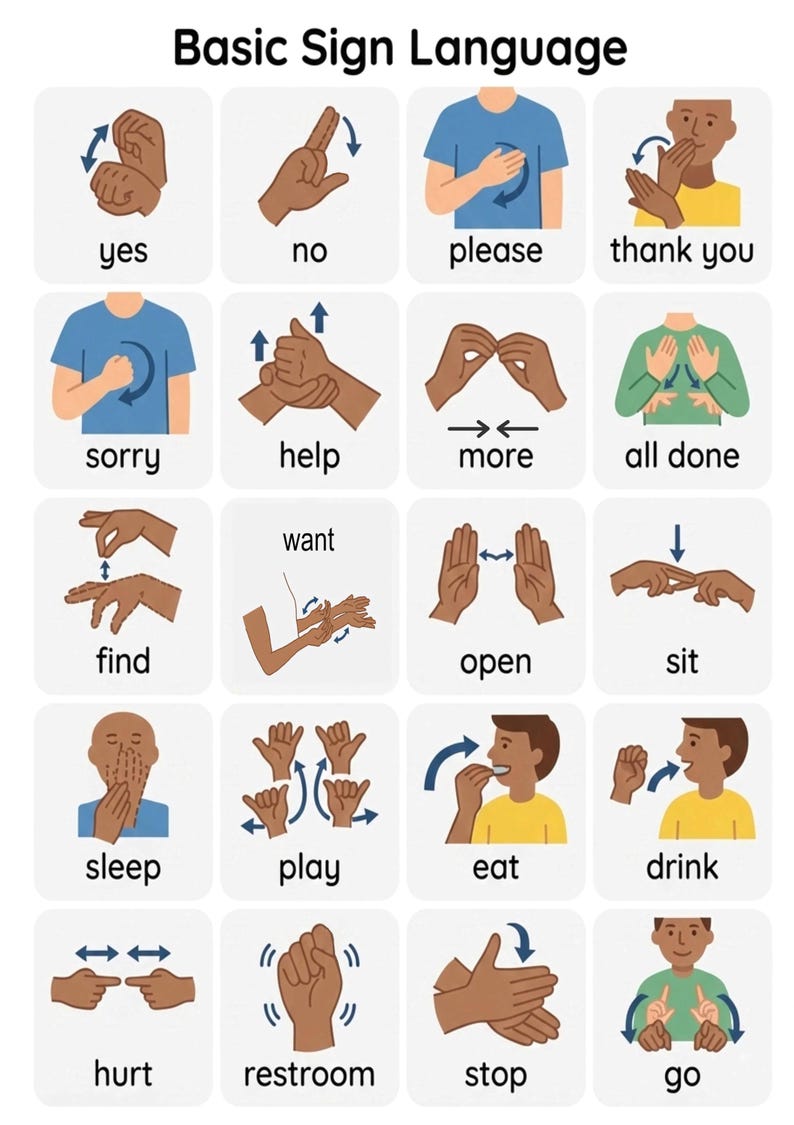
Conclusion
I pray you have put your trust in our Lord and Savior, Jesus Christ. If that has not happened yet, my friend, you are in real danger of hell fire. And I mean, in immediate danger. You’re one breath, one heartbeat…one accident away from eternity when it will be too late to repent. Today is the best day to believe (2 Cor 6:2) since tomorrow is no guarantee. If Jesus Christ came today, here is your fate (Matt 7:21-23). This is why I plead with you as you read this, repent today…and I mean right now. Put your trust in Jesus Christ. If you do not, you will face God’s judgment after death guaranteed (Heb 9:27) or at Jesus Christ’s appearance (Rev 20:12-15), which could happen at any moment.
Here is some related reading for you: Essential Beliefs of Christianity Christians Should Not Compromise On
Resource – Scripture quotations are from The Holy Bible, English Standard Version® (ESV®), Crossway Bibles. (2007). ESV: Study Bible: English standard version. Wheaton, Ill: Crossway Bibles. Used by permission. All rights reserved.


 Welcome to What Christians Want To Know! The mission of this site is to equip, encourage, and energize Christians. Look for regular updates including Bible Verses, Bible Stories, Christian Quotes, Christian Answers, and much more. Find out