



The Book of Jude seems as if it was written for today, and it really is, so find out why.
Who was Jude?
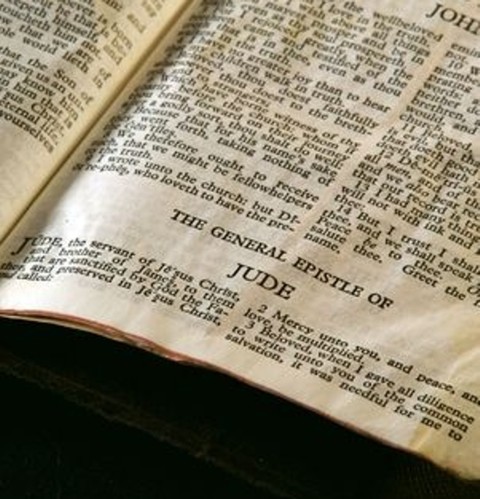 The Book of Jude is not very long (only one chapter), but those twenty-five verses have a lot to say about the last days, and today, it is strikingly similar to the way it was in Jude’s day. Jude is the half-brother of Jesus Christ, having the same mother, and the range of date for this book is incredibly wide, with conservative scholars placing it between the years 70 to 90 AD. If so, it was written shortly before or somewhat after Jerusalem’s fall in 70 AD.

The reason I think the date is much later is because Jude refers to the Apostle’s predictions for the last days (Jude 1:18) as having already come true (Jude 1:17), but clearly, Jude’s epistle is just as relevant today as in the day it was written. That’s the way the Word of God is. It is timeless truth, never changing, always perfect in every way. It is a book for eternity. Jude begins by telling us that he’s “a servant of Jesus Christ and brother of James” (Jude 1:1), so Jude is a servant of Christ. He didn’t claim Jesus as his brother…but as a servant (Greek, “doulos” meaning slave). Notice that Jude puts these relationships in the proper hierarchy; Jesus is His Lord and God (and not his brother), and only by birth is Jude physically related to Jesus.
The Last Days
The Book of Jude seems as if to point to the last days leading up to the return of Jesus Christ. To begin with, the “last days” have been the “last days” for the last 2,000 years. Since Jesus’ ascension, we have always been living in the last days. The phrase “last days” or “end times” is very prominent in the New Testament (Acts 2:17; 2 Tim 3:1; Heb 1:2; James 5:3; 2 Pet 3:3), and it does not refer to a set amount of time or days. Even though two thousand years later, Jesus has still not came back, but we are now and have been living in the last days since Jesus’ resurrection and ascension, meaning Jesus could come back at any given moment. And you can be sure He’ll come back when least expected (Mark 13:35-37; 1 Thess 5:2; 2 Pet 3:10; Rev 16:15).

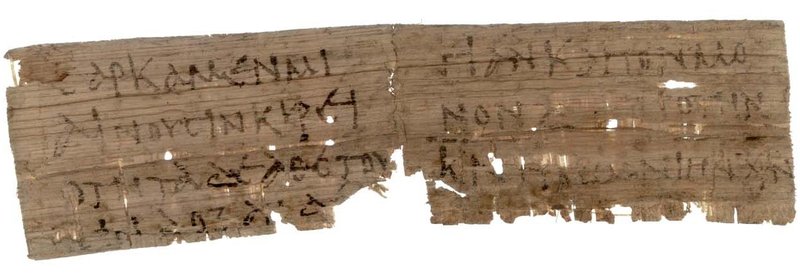
Manuscript of Jude, vs 3-4 Author Unknown
The End Times
Jude wrote this book out of necessity for the church. You can tell it’s different from the rest of the New Testament books because it refers to a later time period than most of the others do. Jude writes with a sense of urgency, saying he “was very eager to write to you about our common salvation, I found it necessary to write appealing to you to contend for the faith that was once for all delivered to the saints” (Jude 1:3). So it was necessary for Jude to write this to contend for the original gospel delivered once and for all. Contending for something means we have to fight for something or defend it, and in this case, it was the faith that was once “delivered to the saints.” This statement is clearly in the past tense.
I’ve heard it said, “If it’s new, it’s not from God; and if it’s from God, it’s not new,” so that’s why “new revelations” from people trouble me deeply (Rev 22:18). Just as it is today, “certain people have crept in unnoticed who long ago were designated for this condemnation, ungodly people, who pervert the grace of our God into sensuality and deny our only Master and Lord, Jesus Christ” (Jude 1:4). This perversion could be the “quid pro quo” God who promises to bless your “seeds of faith,” or adding things to the gospel like, “Jesus Christ + baptism (or tongues, etc.) = salvation.” Jesus plus anything equals nothing!
Don’t Add to the Gospel
 Many swallow these lies because those who brought them in to the church came in under the cover of darkness, or “under the radar,” which is why they have “crept in unnoticed.” If they had been noticed, someone would have said something, but that’s why Jude believes we must contend for the faith originally delivered by Christ and expounded by the Apostles because people are adding elements to the gospel of Jesus Christ all the time. That means it’s not really a gospel at all (Gal 1:7-9). Satan has his own imitations, but clearly, God has already spoken through His Apostles and Prophets (Heb 1:1-2), and again these vereses in the Greek are in the past tense! God is no longer making deliveries! The gospel has already, once and for all, been delivered through the Son of God, Jesus Christ (the Gospels) and the Apostles and the Prophets. We dare not add anything more than that which has already been said. We must never “go beyond what is written” (1 Cor 4:6).
Devoid of the Spirit
Since the date of this book’s writing may have come after most of the Apostles had died, it makes sense that some of the prophecies the Apostles gave had already been fulfilled. Jude writes to remind them about “the predictions of the apostles of our Lord Jesus Christ” (Jude 1:17), and what “They said to you, “In the last time there will be scoffers, following their own ungodly passions” (Jude 1:18). We know it’s not those within the Body of Christ that Jude writes this about, but “these who cause divisions, worldly people, devoid of the Spirit” (Jude 1:20). Without the Spirit of God, no one is a child of God (Rom 8:16). Looking religious means nothing because it’s not about religion; it’s about a relationship with Jesus Christ.
Satan’s Ministers
We are reminded that Satan has his own ministers, and this deceiver will make them look like angels of light (2 Cor 11:4-5), but they only appear that way because they bring a message of darkness. It usually is “Jesus + something,” which would make Jesus’ death on the cross foolishness and useless. Satan was once called Lucifer, meant “light bearer,” but today, he is the prince of darkness (Isaiah 14:12-15). A gospel look-alike that neglects matters of sin, repentance, confession, sanctification, living in holiness, coming out of this world, being Jesus’ disciple, and doing what Jesus’ disciples would naturally do (Matt 25:35-36). Satan has no gospel at all, only a counterfeit unable to save. If the Apostles were here on earth today, they would be appalled at some of the “buffet-style” religions that claim to be Christian. There is only one way and through One Person whereby we must be saved (John 6:44; Acts 4:12). We can’t have a little of this and a little of that, because without the whole gospel of repentance and faith (Mark 1:14-15), you have half the truth, and a half-truth is a whole lie…straight from hell.
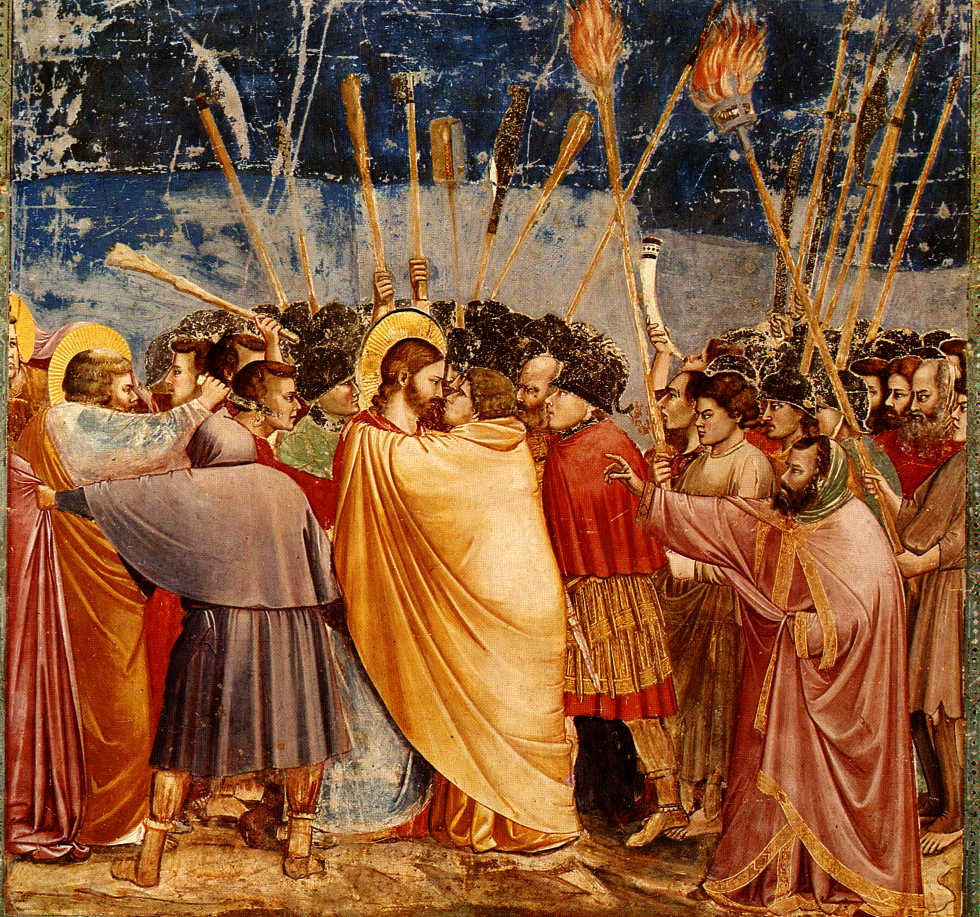
Kiss of Judas – Giotto (date unknown)
Summary
I do not write a lot about the end times events or the last days, but that doesn’t mean it’s not important, but I believe it’s best to focus on Christ and to be ready for His appearing at any moment. I am not a Bible prophecy hound who is constantly searching out for more “signs,” but I do pay attention to what the Scriptures say. I see what’s going on in the world, however I don’t do that at the expense of studying and reading the rest of Scripture. Is Jesus’ returning soon? I don’t know. Are we living in the last days? Yes, but I know a better question: “Have you put your trust in Christ? Are you ready for His appearing because He could come at any moment?” If not, there are other prophecies that will come true someday (Rev 1:7, 20:12-25), so the question remains: “Will you put your trust in the Savior today?” Eternity is a very long time to be wrong.
Conclusion
I pray you have put your trust in our Lord and Savior, Jesus Christ. If that has not happened yet, my friend, you are in real danger of hell fire. And I mean, in immediate danger. You’re one breath, one heartbeat…one accident away from eternity when it will be too late to repent. Today is the best day to believe (2 Cor 6:2) since tomorrow is no guarantee. If Jesus Christ came today, here is your fate (Matt 7:21-23). This is why I plead with you as you read this, repent today…and I mean right now. Put your trust in Jesus Christ. If you do not, you will face God’s judgment after death guaranteed (Heb 9:27) or at Jesus Christ’s appearance (Rev 20:12-15), which could happen at any moment.
Here is some related reading for you: Book of Jude Commentary: Study and Summary
Resource – Scripture quotations are from The Holy Bible, English Standard Version® (ESV®), Crossway Bibles. (2007). ESV: Study Bible: English standard version. Wheaton, Ill: Crossway Bibles. Used by permission. All rights reserved.



 Welcome to What Christians Want To Know! The mission of this site is to equip, encourage, and energize Christians. Look for regular updates including Bible Verses, Bible Stories, Christian Quotes, Christian Answers, and much more. Find out