We are commanded to partake in Communion or the Lord’s Supper, so what’s the proper agenda for churches having this service?
Jesus’ Imperative Command
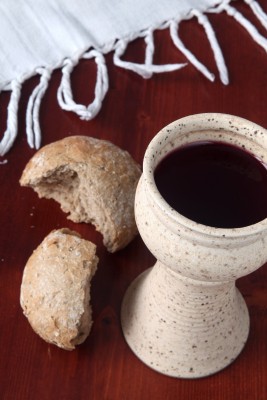
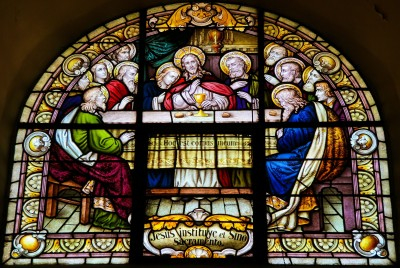
When Jesus and the disciples had the Last Supper, the Passover Meal or as some call it, Communion, He was instituting or commanding a new ordinance for the church. This new command or ordinance is recorded in Matthew 26:26-29 “Now as they were eating, Jesus took bread, and after blessing it broke it and gave it to the disciples, and said, “Take, eat; this is my body.” And he took a cup, and when he had given thanks he gave it to them, saying, “Drink of it, all of you, for this is my blood of the covenant, which is poured out for many for the forgiveness of sins. I tell you I will not drink again of this fruit of the vine until that day when I drink it new with you in my Father’s kingdom.” There is no doubt that this is commanded because Luke puts it this way, “he took bread, gave thanks and broke it, and gave it to them, saying, “This is my body given for you; do this in remembrance of me” (Luke 22:19). The sentence structure in the Greek, and even reading it in most Bible translations, leaves no doubt that this is an imperative comment. “Do this!”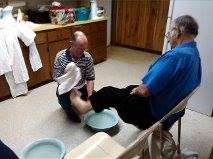 [1]
[1]

Humility in Serving
When Jesus said, “Do this…” it wasn’t a suggestion or if you feel like command, but like that of a general telling his army to do this or else. Our Lord told the disciples and by extension, all believers, “You call me ‘Teacher’ and ‘Lord,’ and rightly so, for that is what I am. Now that I, your Lord and Teacher, have washed your feet, you also should wash one another’s feet. I have set you an example that you should do as I have done for you. Very truly I tell you, no servant is greater than his master, nor is a messenger greater than the one who sent him” (John 13:12b-16). What Jesus was trying to communicate to them was that we are to serve one another; we should humble ourselves as a servant would before a master, which is why He said “I have set you an example that you should do as I have done for you” because “no servant is greater than his master.”
This was largely a lesson of servant hood and humility and not a command (imperative) to wash feet once a year. To wash the feet of the saints is symbolic of our communion with one another and our connectedness through Christ…we are one body…the Body of Christ. In all honesty, the disciples should have been washing Jesus’ feet, but what an example our Lord gave. This also typifies the cleansing that comes through the precious blood of the Lamb (John 13:8). Be the one who empties the diaper pail in the nursery or clean up the vomit on the floor at church. That’s true servanthood and it takes humility. Be that person. “Wash some feet.”

 [2]
[2]“Take; this is my body … this is my blood of the New Covenant …”
Maundy Thursday
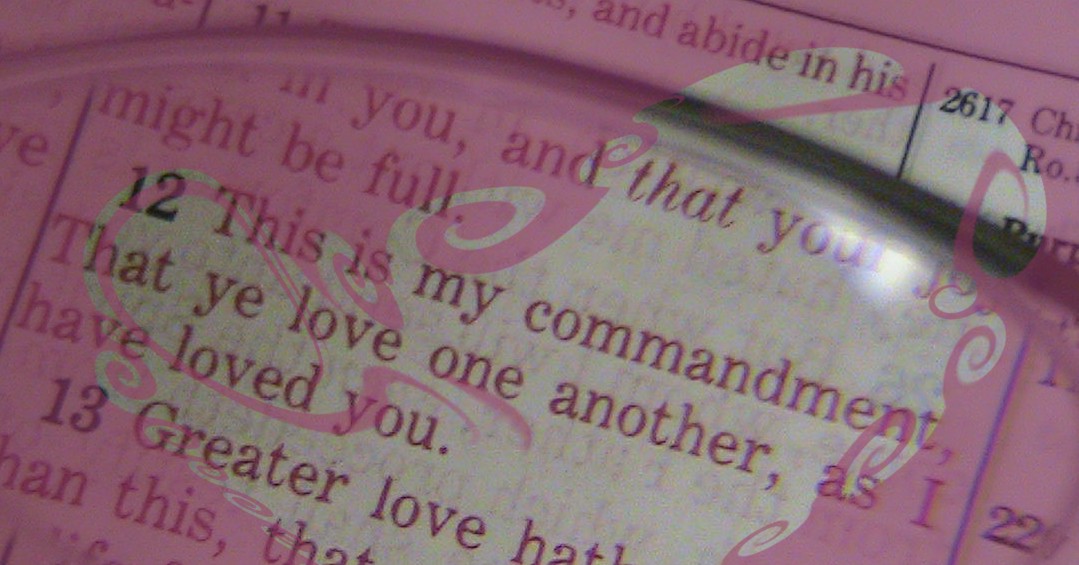
The Passover Meal or Communion is sometimes called the Love Feast and that comes only once a year on the Thursday before Good Friday. It is a very somber service and typically, hymns are sung with no musical instruments, as it was on the night Jesus introduced the New Covenant. The word “Maundy” comes from the Latin word “mandatum” which means “commandment” or “command.” They base this on Jesus saying“A new commandment I give you: Love one another” (John 13:34). The phrase Maundy, as I said is of Latin origin and in Latin it read: “Mandatum novum do vobis ut diligatis invicem sicut dilexi vos.” In English it is “A new commandment I give unto you, That ye love one another; as I have loved you.” Because of this, many churches believe that Maundy Thursday and the ordinances of Communion (during the rest of the year) are commanded (and they are!). A small mintority of churches teach that the foot washing is commanded, but this was “an example,” not an imperative command.
Although Maundy Thursday is not a national holiday in America, it actually is in some nations like Columbia, Denmark, Iceland, Norway, Paraguay, Philippines, and in Spain where public schools, some places of work, and government offices are closed.
Below is an outline that churches, pastors, elders or deacons (even new house churches) can use as a guideline or an outline of how to observe Communion or the Lord’s Supper, or Maundy Thursday, generally referred to as the Love Feast. Some churches may differ in their order but the overall agenda below is what most churches use for Maundy Thursday. For Communion that takes places during the rest of the year, obviously there is no a meal and people don’t immediately leave after Communion, but the elements of bread and juice must be in this service. Please note that this agenda is flexible and not set in concrete, and times may vary for some churches, but just a guideline that churches may use.
 [3]
[3]“Do this in remembrance of Me.”
Maundy Thursday
The Love Feast, Communion
6:30 – Settings for tables are placed, foods are placed by type (fruits, cheeses, meats).
Service Begins:
7:00 – Prayer and Bible reading of Jesus and the Disciples on Passover night (Matt 26:26-29), then the Love Feast (meal).
7:15 – Communion
7:25 – Closing hymn (worship leader’s choice), no closing prayer, leave quietly. Fellowship outside of the sanctuary permitted.
Clean up.
Leave Services Quietly
The Command for Communion
 [4]Many people I know claim to be Christians and yet never assemble together as the church as commanded by God (Heb 10:24-25). There are at least 6 imperative commands for the Passover Meal or Communion which say, “Do this…” So to claim to be a believer and never attend church is breaking over 100 commands from Jesus or in the Bible because there are over 100 “one another’s” and no one can do to “one another” alone. Didn’t Jesus say whoever hears and keeps my word, him I shall love? Jesus said “Whoever has my commandments and keeps them, he it is who loves me” (John 14:21a). We prove we love Jesus by obeying Jesus and prove we do not love Him by our disobedience to His commands. How can we say we love God and not obey God? This is irreconcilable. People can say I love you and then do nothing you ask of them to do. That is not true love.
The Importance of Communion
In a clear indication of the coming New Covenant, Jesus said, and I believe it is the earliest reference to Communion, “I am the living bread that came down from heaven. If anyone eats of this bread, he will live forever. And the bread that I will give for the life of the world is my flesh” (John 6:51). Jesus’ dialogue in John 6 is clearly seen as a reference to Communion or the Lord’s Supper, sometimes called the Love Feast. If you don’t think Jesus was serious, read what He said to the Jewish religious leaders who scoffed at Him when He said they must eat His flesh and drink His blood.
In reference to Communion, our Lord “said to them, “Truly, truly, I say to you, unless you eat the flesh of the Son of Man and drink his blood, you have no life in you. Whoever feeds on my flesh and drinks my blood has eternal life, and I will raise him up on the last day” (John 6:53-54). That sounds like it’s of critical importance. It sounds like a matter of eternal life or eternal death, as Jesus said, “For my flesh is true food, and my blood is true drink. Whoever feeds on my flesh and drinks my blood abides in me, and I in him” (John 6:55-56).
 [5]
[5]
I pray you realize the critical importance of the church (the very Body of Christ) and the commands to love one another and assemble together and to observce the Lord’s Supper or Communion. Scripture tells us that it is not negotiable…it is imperative! Are you part of the Body of Christ…or not (Matt 7:21-23)? Better be sure (Heb 9:27; Rev 20:12-15).
Conclusion
I pray you have put your trust in our Lord and Savior, Jesus Christ. If that has not happened yet, my friend, you are in real danger of hell fire. And I mean, in immediate danger. You’re one breath, one heartbeat…one accident away from eternity when it will be too late to repent. Today is the best day to believe (2 Cor 6:2) since tomorrow is no guarantee. If Jesus Christ came today, here is your fate (Matt 7:21-23). This is why I plead with you as you read this, repent today…and I mean right now. Put your trust in Jesus Christ. If you do not, you will face God’s judgment after death guaranteed (Heb 9:27) or at Jesus Christ’s appearance (Rev 20:12-15), which could happen at any moment.
Here is some related reading for you: How Often Should Communion or the Lord’s Supper be Taken? [6]
Resource – Scripture quotations are from The Holy Bible, English Standard Version® (ESV®), Crossway Bibles. (2007). ESV: Study Bible: English standard version. Wheaton, Ill: Crossway Bibles. Used by permission. All rights reserved.