When a pastor gives a sermon, should he only use exegesis as opposed to eisegesis? What exactly are exegesis and eisegesis and what’s the difference between the two?
What is Exegesis?
 [1]

The word “exegesis” comes from an ancient Greek word and means “to lead out.” The goal of exegesis is to draw the true meaning out of the text rather than pushing personal ideas into it (which is eisegesis). We all use exegetical methods every day without even thinking about it. When you read or look at something, you extrapolate out of what you see or read and turn that into something meaningful that you can understand. You are “pulling out” the real meaning, so we do exegesis all the time by just looking at things or people. We approach a given situation and we automatically apply a critical analysis to it. When my mother once said, “You boys are always so loud,” what she was trying to tell us was that we were making too much noise in the house. We used exegetics (without knowing it) to draw out the meaning of what mom said, and that was to quiet down. When she said “you boys” we understood that to mean us. When we read Scripture we should be asking “What is God saying to us or me or what was God saying to the original audience?”
What is Eisegesis?
If exegesis is pulling out or determining the original meaning out of the text or drawing out the texts meaningful information, then the opposite of that is eisegesis. There are inherent dangers in using eisegesis. For one thing, instead of drawing out the meaning of texts (exegesis), eisegesis is doing just the opposite. Eisegesis is inserting a meaning or something that is not necessarily in the text, but it is assumed in the text’s meaning. That is very dangerous because it is so difficult to determine if the eisegesis is correct or if it fits the context or it fits in with biblical doctrine. If you pull out meaning (exegesis) it’s something that you can critically analyze to see if it’s true or not true by comparing it to what Scriptures say elsewhere, however eisegesis, is a slippery slope where you can severely misinterpret a Scripture or Scriptures and have the potential for heresy or at the bare minimum, biblical or doctrinal error.

 [2]
Cults and Eisegesis
Most of the cults are formed through eisegesis errors. Using eisegesis runs the risk of taking text out of context and creating a pretext (and possibly a false one). If you were trying to pull your foot out of a tight shoe, you might use a shoehorn to help slide it out of the shoe (exegesis), but trying to use a shoehorn and forcing something (eisegesis) that doesn’t fit is bad because it may not be intended to fit! Instead of trying to interpret a Scripture on exactly what it says, and trying to force meaning into it (by eisegesis), brings greater potential for doctrinal error. It is so much safer to read Scripture at face value or determine what this really means within the context of where that verse is, by using exegetical methods.
Text out of Context
I had one man tell me that Jeremiah wrote about the Christmas tree and that this ties this holiday into with paganism. So he truly believed that Jeremiah wrote about Christmas trees before Christi even existed, but is this so? Let’s apply some exegesis in finding the answer to see if my friend was right in his accusation. Jeremiah the Prophet write in 10:2-4, that “the customs of the peoples are vanity. A tree from the forest is cut down and worked with an axe by the hands of a craftsman. They decorate it with silver and gold; they fasten it with hammer and nails so that it cannot move.” Is this about Christmas or a pagan celebration? No, Jeremiah is writing about idolatry as we read that they have “Beaten silver is brought from Tarshish, and gold from Uphaz. They are the work of the craftsman and of the hands of the goldsmith” (Jer 10:9). In this case, as in all cases, context is king. You cannot take one verse or verses and try to force a meaning (eisegesis) that is something entirely different from what the chapter or paragraph says. That is how cults are created and just how Satan operates. They take one text out of context to create a false pretext. By doing so, their eisegesis build false doctrines or beliefs.
Proper Exegesis
 [3]
It is too easy to want to make the Bible say what it was never intended to say, but if we can properly exegete what God is trying to tell us or what He was trying to communicate to the original audience, then we can teach what God truly intends for us to know. And here’s how you do that, directly from the Apostle Paul: “Study, to show yourself approved unto God, a workman that needs not to be ashamed, rightly dividing the word of truth” (2 Tim 2:15). All of our study is for the purpose of it being “approved unto God,” and not man, and part of that study includes using exegesis. It helps us get it right.
Summary
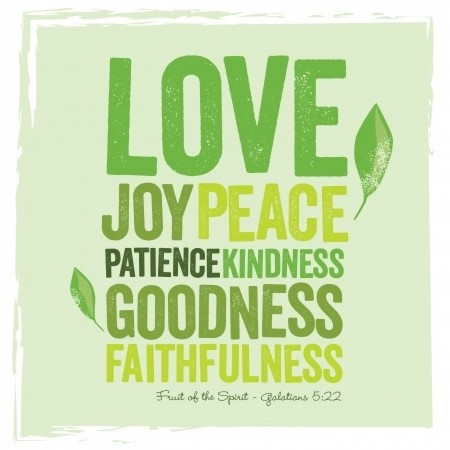
If we want to do proper expository, verse by verse preaching, we have to look at difficult passages and compare them with the plain ones. That is also the process of exegesis. There is so much error out there today because preachers are not preaching exegetically but instead using eisegesis. When we understand how to teach the Bible, we should be looking at the context of the entire chapter and in some cases, the entire book. When James wrote that “faith without works is dead” (2:26) he wasn’t saying that we are saved by works but a person that is saved produces works. James does not say that we are not saved by works but a person that is saved will naturally, as a result of their conversion, produce works. That’s a living faith as opposed to a dead faith, which has no works. We see this in Jesus’ teaching “that you bear much fruit and so prove to be my disciples” (John 15:8). Naturally they are not saved by this fruit by prove they are saved by their fruit. Jesus says to believers “I chose you and appointed you that you should go and bear fruit and that your fruit should abide” (John 15:16), so someone who has no works must not be abiding in the Vine (in Jesus Christ). That is something we can exegete from the entire chapter of John 15.
 [4]
Conclusion
I pray you have put your trust in our Lord and Savior, Jesus Christ. If that has not happened yet, my friend, you are in real danger of hell fire. And I mean, in immediate danger. You’re one breath, one heartbeat…one accident away from eternity when it will be too late to repent. Today is the best day to believe (2 Cor 6:2) since tomorrow is no guarantee. If Jesus Christ came today, here is your fate (Matt 7:21-23). This is why I plead with you as you read this, repent today…and I mean right now. Put your trust in Jesus Christ. If you do not, you will face God’s judgment after death guaranteed (Heb 9:27) or at Jesus Christ’s appearance (Rev 20:12-15), which could happen at any moment.
Here is some related reading for you: What is Biblical Eisegesis And What is Exegesis? [5]
Resource – Scripture quotations are from The Holy Bible, English Standard Version® (ESV®), Crossway Bibles. (2007). ESV: Study Bible: English standard version. Wheaton, Ill: Crossway Bibles. Used by permission. All rights reserved.